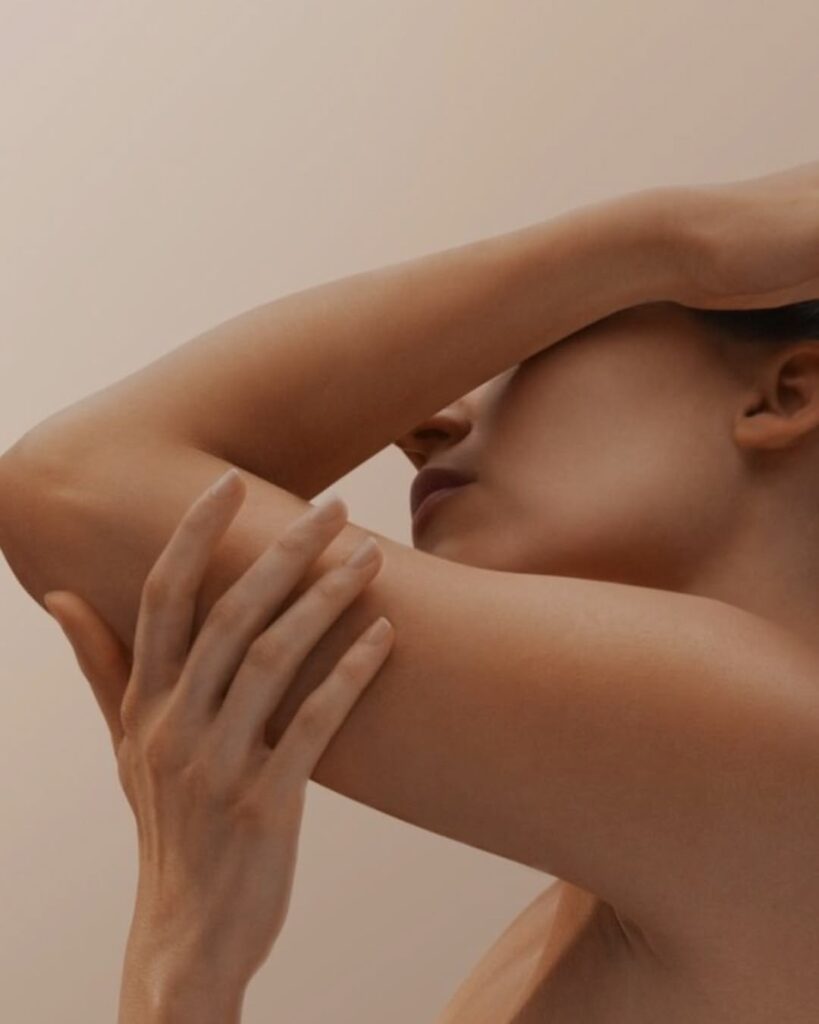
Crepey Skin on Arms, Knees, Stomach: Causes & Real Solutions
Why Does Body Skin Become Crepey?
Healthy-looking skin depends on several structural components working together. Collagen provides strength and support. Elastin contributes to elasticity. The extracellular matrix helps maintain the environment surrounding skin cells. And adequate hydration helps the skin maintain its plump, smooth appearance.
As we age, these systems gradually change. Add cumulative sun exposure, hormonal changes, weight fluctuations, and dehydration, and body skin may start looking noticeably thinner and less resilient.
Why Does It Often Become More Noticeable After 40?
Hormones matter. Estrogen has important effects on skin physiology, including collagen content, hydration, and skin thickness. As women move through perimenopause and menopause, hormonal changes can contribute to noticeable changes in skin quality.
You may suddenly notice that your arms look less firm, the skin above your knees wrinkles when you stand, your abdomen looks softer despite having little fat, or the inner thighs develop a thin, slightly crinkled appearance. Sometimes the body hasn’t changed dramatically—the skin covering it has.
Why Are the Knees and Arms Such Common Areas?
Certain areas naturally have relatively thin skin and are exposed to constant movement. The skin around the knees repeatedly stretches and folds. Upper arms are also particularly vulnerable to changes in skin elasticity, especially after weight loss or with age-related changes in collagen. The abdomen can show similar changes after pregnancy, significant weight fluctuations, or simply aging. This is why treating these areas purely as “fat pockets” often produces disappointing results.
Can Losing More Weight Fix Crepey Skin?
Not necessarily. If excess body fat is present, reducing it can obviously change body shape. But when the main issue is thin, lax skin, additional weight loss doesn’t automatically improve skin quality. Sometimes the opposite happens: as the layer underneath becomes smaller, the laxity that was already present becomes more visible. This is why we always need to distinguish between volume and skin quality.
Why Moisturizer Alone Isn’t Always Enough
Moisturizing body lotion is important. Hydrated skin generally looks smoother and healthier than dehydrated skin. But moisturizer primarily works on hydration and barrier support. When visible changes involve collagen, elasticity, photoaging, and tissue structure, we need to think beyond simply applying body cream. Professional body treatments can focus on several components at the same time: skin renewal + hydration + mechanical tissue stimulation + consistent home care.
Retinol for Crepey Body Skin
Retinol isn’t reserved for the face. Retinol-based body care can be particularly interesting when the goal is improving the appearance of photoaged, rough, or less resilient body skin. At TIVA BEAUTY, our Retinol Body Renewal treatment combines professional skincare with targeted manual techniques. Professional products are applied to the selected area and combined with gua sha and hands-on massage. This allows us to approach the concern from two directions: professional active skincare and mechanical tissue stimulation. Areas such as the abdomen, inner arms, thighs, and skin above the knees are particularly suitable for this type of body-care approach.
What About ICOONE Microstimulation?
Mechanical stimulation can also become part of a skin-quality program. ICOONE uses controlled vacuum and motorized rollers to create repeated microstimulation across the tissue. Rather than simply treating an area because we want it “smaller,” settings can be selected with skin quality and tissue stimulation in mind. This can be particularly useful when reduced firmness exists alongside cellulite or fluid retention. Again, we’re treating what we actually see rather than assigning every body concern to the fat-loss department.
Can Microneedling Be Used on the Body?
For selected clients and areas, microneedling can also be considered. Controlled micro-injury initiates a repair response involving fibroblasts and extracellular matrix remodeling. Body microneedling may therefore be incorporated into programs focused on texture and early skin laxity. However, treatment depth, frequency, and suitability should always be assessed individually. Creating more trauma does not automatically create more collagen. Skin biology remains stubbornly uninterested in aggressive marketing.
Don’t Ignore Sun Damage on the Body
One of the biggest contributors to prematurely aged-looking skin is cumulative UV exposure. We diligently apply SPF to our faces while allowing our chest, shoulders, arms, and hands to spend decades collecting ultraviolet radiation. Eventually, the difference becomes visible. UV exposure contributes to the degradation and disorganization of collagen and elastin. So if your goal is improving skin quality, protecting exposed body skin from the sun is part of the treatment—not an optional extra.
Can Crepey Skin Completely Disappear?
That depends on the degree of laxity. Professional non-surgical treatments can improve the appearance, hydration, texture, and firmness of appropriate skin. But significant excess skin cannot realistically be transformed into perfectly tight skin by a cream, massage, or aesthetic device. There are limits to non-invasive treatments. Understanding those limits is part of choosing the right treatment.
Crepey Skin Treatments in Calgary
If you’ve started noticing thin, wrinkled, or less elastic skin on your arms, abdomen, thighs, or above your knees, losing more weight may not be the answer. At TIVA BEAUTY Calgary, we focus on assessing the quality of the skin and tissue first. Depending on the area and condition of the skin, a professional program may incorporate Retinol Body Renewal, ICOONE microstimulation, manual techniques, professional body skincare, or microneedling when appropriate. Because sometimes the next stage of body care isn’t about becoming thinner—it’s about taking better care of the skin covering the body you’ve already built.