Why Skin Loses Firmness After 35 and What Helps
At some point, usually in our thirties or forties, many women notice something frustrating.
The body hasn’t necessarily changed dramatically. Your weight may even be exactly the same. But the skin doesn’t look the same anymore.
The abdomen looks softer. The skin above the knees becomes slightly looser. Inner arms lose some firmness. The thighs don’t look quite as smooth as they once did.
This isn’t always about gaining fat. Often, what you’re seeing is a gradual change in skin structure and elasticity.
At TIVA BEAUTY in Calgary, improving skin quality is treated very differently from simply trying to “lose inches.”
What Gives Our Skin Its Firmness?
Two of the most important structural proteins in the skin are collagen and elastin. Collagen provides strength and structural support. Elastin helps the skin stretch and return toward its original shape.
The skin also relies on hydration, extracellular matrix components, and healthy connective tissue to maintain its smooth, resilient appearance.
When we’re younger, the skin is generally better at maintaining and repairing these structures. With age, that balance gradually changes.
What Happens to Collagen as We Age?
Collagen production and remodeling become less efficient with age. At the same time, existing collagen is continuously exposed to factors that contribute to its breakdown. These include:
- UV radiation
- Oxidative stress
- Smoking
- Chronic inflammation
- Hormonal changes
- Significant weight fluctuations
- Natural biological aging
The result isn’t that collagen suddenly disappears on your 35th birthday. Human biology is inconveniently less dramatic than social media. Instead, the structural changes accumulate gradually, and eventually we start seeing them in the mirror.
Why Women Often Notice More Changes Around 40
Hormonal changes become increasingly relevant as women approach perimenopause and menopause. Estrogen plays an important role in maintaining skin hydration, thickness, and collagen. As estrogen levels change, some women begin noticing:
- Increased dryness
- Thinner-feeling skin
- Reduced elasticity
- More visible fine lines
- Changes in body skin texture
- Greater laxity around the abdomen, arms, and knees
This is one reason the skincare strategy that worked perfectly at 25 may no longer be enough at 40. The skin itself has changed.
Loose Skin or Body Fat?
This distinction is extremely important. Sometimes clients look at an area and assume: “I need to lose more fat here.” But reducing body fat doesn’t automatically make loose skin tighter. In fact, after significant weight loss, the loss of underlying volume can make existing skin laxity more noticeable.
When evaluating an area such as the abdomen or inner thighs, we need to consider several separate components:
- Subcutaneous fat – the fatty tissue underneath the skin.
- Skin laxity – reduced firmness and elasticity of the skin itself.
- Cellulite and connective tissue structure – which can affect surface texture.
- Fluid retention – which can temporarily change the size and appearance of the tissue.
- Muscle tone – which influences the overall shape underneath.
These problems can exist individually or all at once. And they shouldn’t all receive the same treatment.
Can You Improve Skin Elasticity?
You cannot stop biological aging, but you can support skin quality. The most useful approach is usually a combination of consistent home care and professional treatments designed to support hydration, renewal, and tissue stimulation.
Depending on the skin, this can include retinoids or retinol-based body care, professional massage techniques, mechanical stimulation, microneedling, appropriate energy-based treatments, and consistent sun protection.
Nutrition matters too. The body needs adequate protein, micronutrients, and energy to maintain and repair tissue. No professional cream can negotiate with a chronically underfed body.
Why Retinol Isn’t Only for Your Face
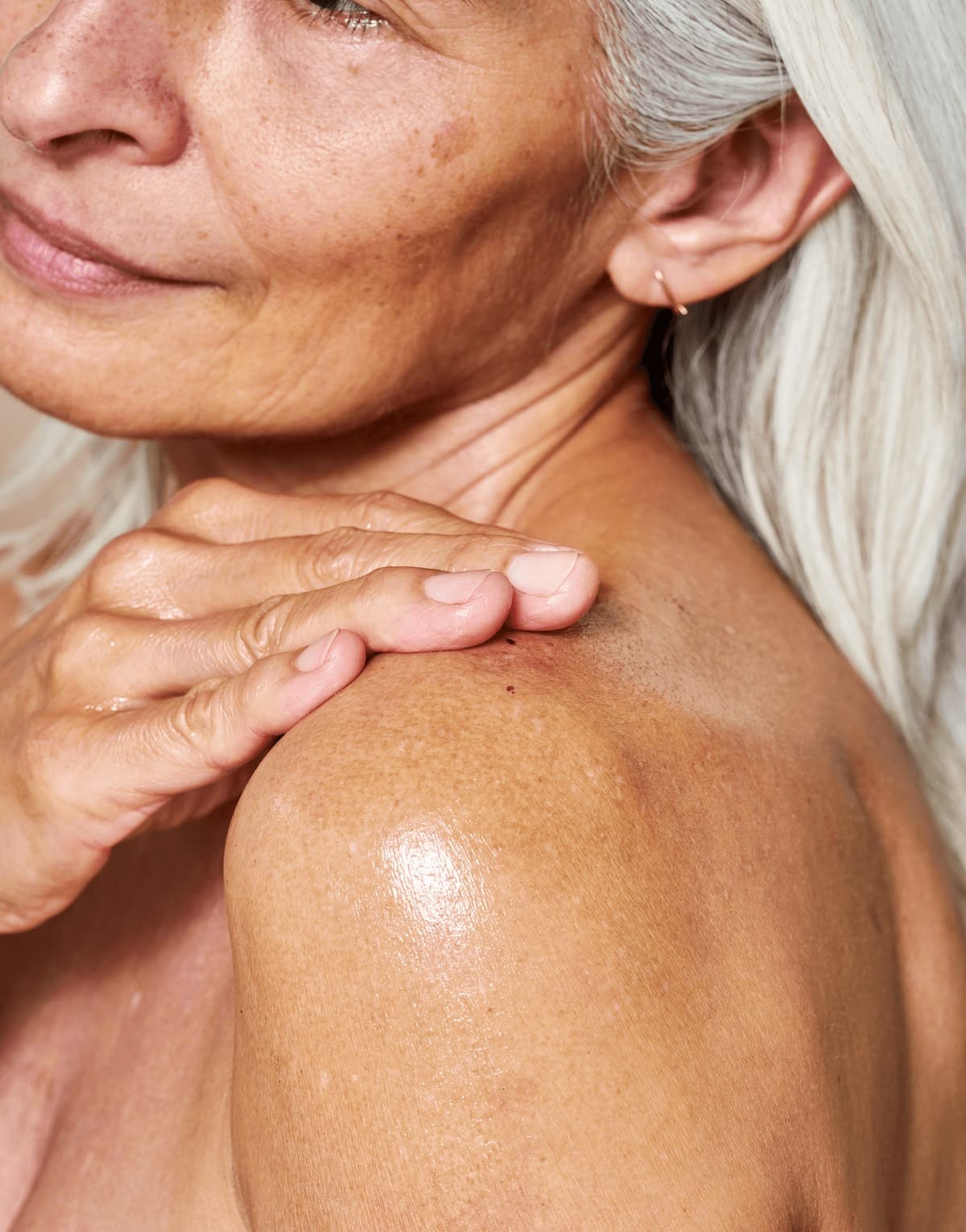
Most people associate retinol with facial skincare, but the skin on your abdomen, thighs, arms, and décolleté also changes with age. Retinol and retinoid-based skincare can support epidermal renewal and are widely used in skincare programs targeting signs of photoaging and uneven texture.
This makes professional retinol body treatments particularly interesting for skin that appears dry, thin, crepey, uneven, or less elastic. At TIVA BEAUTY, we use the Retinol Body Renewal treatment focused specifically on body skin quality.
What Happens During a Retinol Body Renewal Treatment?
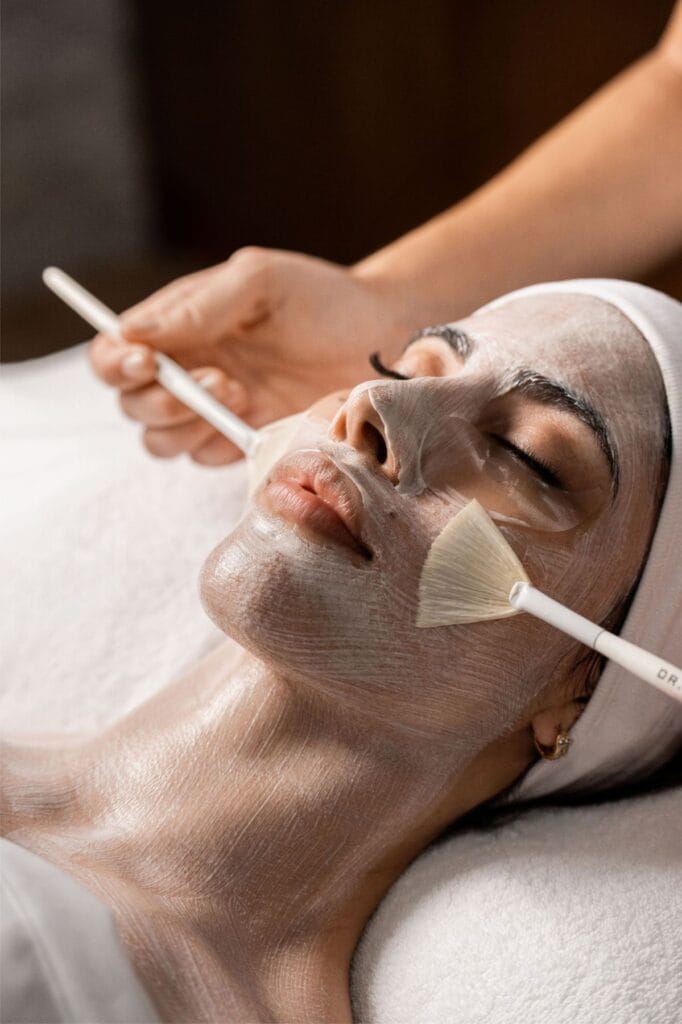
This isn’t simply a body cream application. The treatment combines professional skincare with targeted manual techniques. A professional serum is applied to the selected area, followed by gua sha and hands-on massage techniques. We then work with a professional massage formulation and complete the treatment with finishing body care.
The purpose is to combine active skincare with mechanical stimulation of the tissue. This makes it particularly suitable for areas where skin quality is the primary concern rather than simply body fat.
Common treatment areas include:
- Abdomen
- Inner thighs
- Arms
- Skin above the knees
- Buttocks
- Other areas showing reduced firmness
Why Mechanical Stimulation Matters
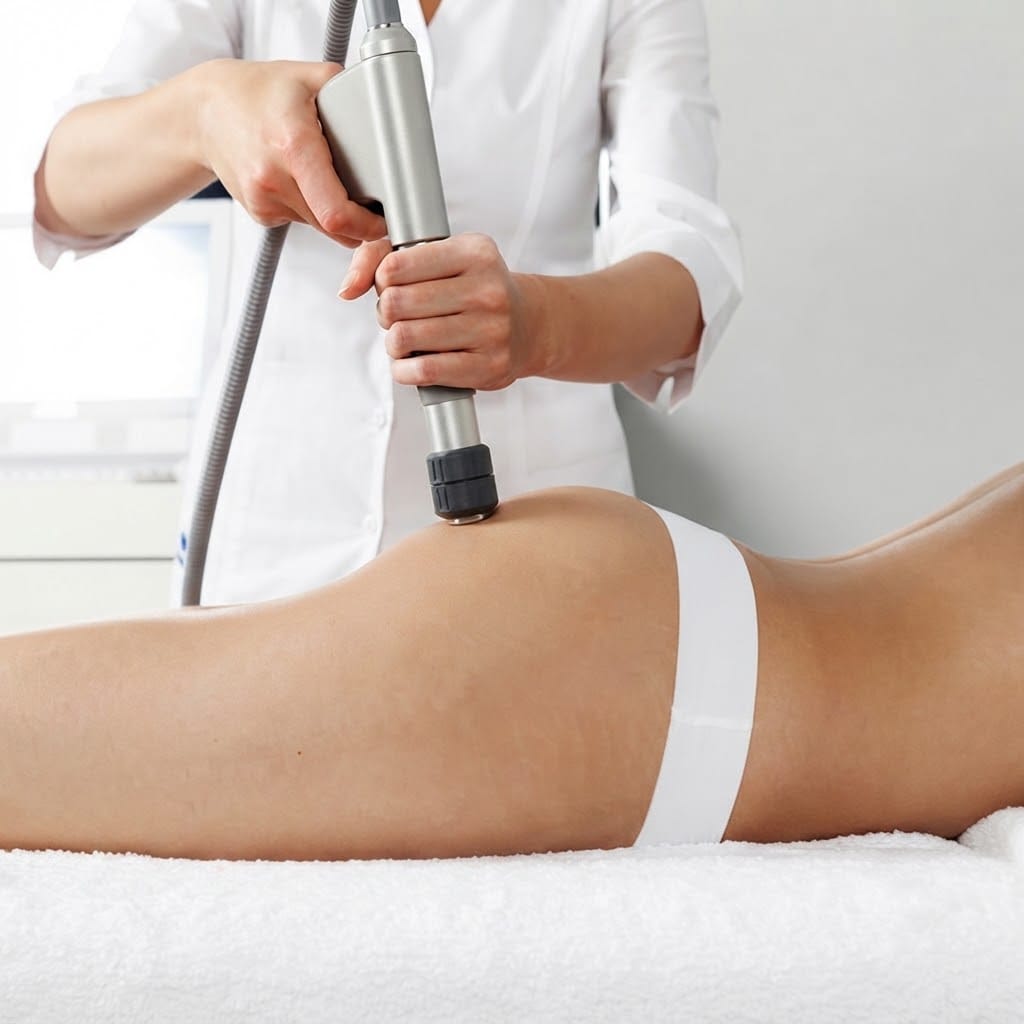
Skin and connective tissue respond to mechanical forces. Professional massage and mechanical body technologies create controlled movement, pressure, and stimulation within superficial tissues.
This is one reason we often combine professional skincare with techniques such as massage, gua sha, or TIVA Body Reset ICOONE microstimulation rather than relying on topical products alone. The objective is to approach skin quality from more than one direction.
What About Microneedling for Loose Skin?
For selected areas and clients, microneedling can also be considered when the goal is skin remodeling. Controlled micro-injury initiates a wound-healing response involving fibroblasts and extracellular matrix remodeling. It can therefore be useful when the concern involves texture and early laxity rather than a large amount of excess skin.
Again, the goal isn’t maximum trauma. More inflammation does not automatically produce more beautiful skin.
Don’t Forget the Sun
If improving collagen and elasticity is the goal, UV protection deserves much more attention than it usually receives. Ultraviolet radiation contributes to collagen degradation and photoaging.
That means spending money on collagen-focused treatments while repeatedly exposing unprotected skin to strong UV radiation is a rather inefficient financial arrangement. Protect exposed areas of the body, especially the chest, shoulders, arms, and hands.
Skin Firming Treatments in Calgary
At TIVA BEAUTY Calgary, we approach skin firmness as a skin-quality issue, not simply a weight-loss problem. Depending on your skin and treatment area, a program may incorporate professional retinol body care, manual techniques, gua sha, ICOONE microstimulation, microneedling, or other professional treatments.
Because after 35 and 40, the goal doesn’t always need to be becoming smaller. Sometimes the most visible improvement comes from making the skin you already have look healthier, smoother, denser, and more resilient.